



Strategic Investments for a Stronger RGC Future
See how RGC collaborations are helping turn science into new medicines.
.png)
Regeneron
January 13, 2026
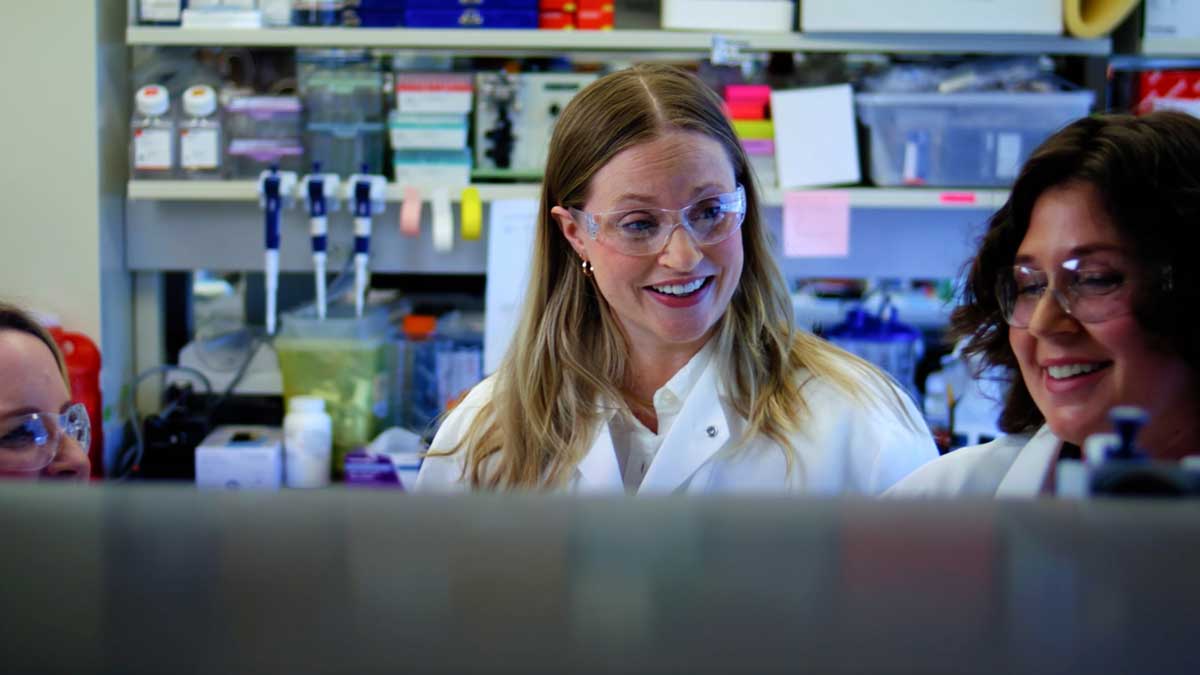
Regeneron Genetics Center® (RGC) was founded with the mission of transforming drug development and healthcare more broadly through human genetics and large-scale data. The aspirations have always been bold, and from the beginning, we knew that we would have to invest in critical capabilities and collaborators to unlock previously unimagined scale and to move at unprecedented speed that our science dictated.
We know science moves fastest when the right foundations are in place.
That’s why we not only build our own capabilities here at Regeneron, but also make strategic investments in key collaborators whose innovations help us achieve our aspirations and bring our breakthroughs to people with serious diseases.
“From the beginning, RGC was designed as a broad and opportunistic discovery engine. We wanted to create datasets large enough and deep enough to rewrite the rules of drug development and answer questions we couldn’t even imagine at the time. To achieve this, we recognized from the outset that we would need to invest heavily not only in our internal capabilities, but in key collaborators, around the world, and across the spectrum of data, sequencing, and patient and consumer platforms,” said Aris Baras, M.D., Senior Vice President, Head of RGC.
Why Collaborations Matter
Turning science into medicine is a team effort. At RGC, we’ve shown how large, representative datasets can uncover and validate therapeutic targets. But scale alone isn’t enough. Progress also depends on:
- Representation across ancestries and geographies
- Speed and capacity to make large-scale studies a regular part of discovery
- Trusted collaboration so researchers worldwide can work together reliably and at speed
Our investments across responsible infrastructure, sequencing technology advancements, data analyses innovation and clinical data integration strengthen each of these foundations and help prepare discovery for the decades ahead.
Building the Infrastructure for Secure, Global Collaboration
In 2013, as RGC was building our sequencing capacity, we needed a secure way to manage and share data at an unprecedented scale. After researching options, we partnered with DNAnexus to provide infrastructure at a time when a cloud-based strategy wasn’t the obvious path – but proved to be a forward-thinking decision, especially as our scale quickly surpassed our wildest dreams.
Over the years, this collaboration has become integral to how we operate. Early on, it supported initiatives like DiscovEHR with Geisinger Health System in Pennsylvania; today, it underpins everything from large-scale sequencing projects to trusted research environments used by global collaborations. Together, we built the systems required for modern genomics and established environments that allow over 150 collaborators to work with us securely and at speed.

“We scaled together, we grew together, we developed solutions together — we are partners. It isn’t just a transaction,” said William Salerno, Ph.D., Executive Director of Genome and Sequencing Informatics.
In 2020, after six years working together closely, Regeneron became an equity investor through DNAnexus’ $100 million financing round, supporting the company’s global growth and continued development of its platform. The system has since been scale-tested on millions of samples using tools such as GLnexus, which RGC developed with DNAnexus and other collaborators to enable efficient large-scale data merging.
“It’s one thing to do a lot,” added Will. “It’s another to do a lot fast and well.” Our investment in this space has ensured that our analytical infrastructure can keep pace with the speed and scale of modern genomics.
Advancing Sequencing Efficiency and Scale
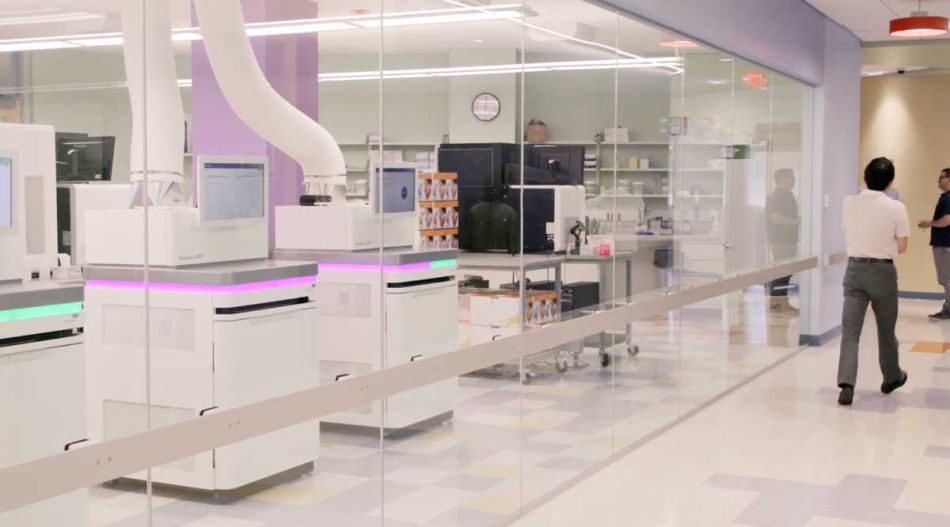
Sequencing cost and throughput remain among the most significant bottlenecks in genomic research. To address this, Regeneron collaborated with and invested in Ultima Genomics in 2022, supporting the development of a novel sequencing architecture designed to deliver more data at lower cost. By rethinking flow cell design, chemistry and machine learning, the new platform has already reduced costs by tens of millions of dollars — creating an alternative technology for the most cost-intensive aspect of data generation.
Most of the industry continues to rely on established sequencing platforms, including those we use every day. But we also saw an opportunity to work closely with a collaborator to innovate on the underlying technology. This relationship has allowed us to align the platform’s development with the needs of large-scale research.
In 2025, Ultima’s UG 100™ system was selected for the UK Biobank Pharma Proteomics Project, the largest proteomics study undertaken to date, with sequencing performed at RGC. The same platform is powering another major proteomics initiative with Geisinger Health System, analyzing 200,000 serum samples.
What began as a strategic investment to overcome barriers in our own research has now enabled a platform that supports population-scale studies worldwide. “Our investment helped drive innovation — not only for Regeneron, but for everyone using the platform,” said John Overton, Ph.D., RGC's Vice President and Chief of Sequencing and Lab Operations. “By being involved early, we were able to help guide the platform’s development toward an affordable, scalable solution that accelerates genomic research.”
But we’re not stopping here. Through this collaboration, we’re exploring how far we can push the system, from driving down the cost per genome or proteome to maximizing the number of samples processed per wafer. We are also introducing more automation to improve coverage uniformity, and re-engineer bioinformatics workflows so sequencing data can be analyzed even faster. Together, these improvements will make large-scale sequencing more efficient, affordable, and widely applicable to the next wave of drug discovery.
Linking Clinical Context and Genetics at Scale
For more than a decade, RGC built deeply phenotyped cohorts one agreement at a time — an effective but resource-intensive approach. To accelerate and scale this process, we invested in Truveta, a network of more than 30 U.S. health systems. Through this collaboration we can now access de-identified, longitudinal clinical data from over 120 million patients in a standardized, scalable way. This helps us assemble large cohorts faster while maintaining consistency in data quality, ethical oversight, and biospecimen collection.
“When you can efficiently access a dataset of that size and complexity, the signals you uncover become far more powerful,” said RGC’s Senior Vice President and Chief Business and Administrative Officer, Andrew Deubler.
In 2025, our collaboration with Truveta enabled them to launch the Truveta Genome Project — an initiative to sequence up to 10 million volunteers and link de-identified genetic data with rich clinical information. RGC holds exclusive rights to perform all research-related sequencing for the project.
Each of these collaborators plays a different role: infrastructure for secure collaboration, sustainable sequencing scaling, and connection between discovery and patient outcomes. Together, they form a stronger foundation for science.
Share this story


More Regeneron Stories
.jpg)
10 Years of Impact Through Our Global Volunteer Initiative
As Day for Doing Good enters its second decade, we reflect on what it has meant to colleagues and communities.
October 19, 2026
Tapping into Real-World Data for Positive Human Impact
Join us for the latest episode of The Nucleus, exploring how real-world data and genomic insights can improve health.
October 14, 2026
.jpg)
Research & Preclinical Development
A Mission Rooted in Neuroscience
Guided by a founding commitment, powerful insights and novel scientific approaches, we're aiming to address some of the most complicated conditions.
September 25, 2026