


The Ins and Outs of Itch
Following the science of inflammation to break the cycle of itch and reduce the significant daily burden of skin diseases.

Regeneron
September 24, 2026
Chronic skin diseases affect 30–70% of people worldwide and are the most common reason people visit their primary healthcare providers.1 Yet, they are frequently underrecognized as serious medical issues, despite their profound daily impact.2,3 Conditions such as atopic dermatitis (AD), chronic spontaneous urticaria (CSU), prurigo nodularis, and bullous pemphigoid (BP) may appear to present only on the skin's surface, but the reality is much deeper. A defining symptom of these diseases is persistent, debilitating itch, a result of complex interactions between the immune and nervous systems.4 Itch perpetuates a relentless cycle of disease that can negatively impact people’s work and personal lives.5 To truly address this burden, it is essential to understand the underlying biological processes that contribute to the far-reaching consequences of itch.
Exploring itch, inside and out
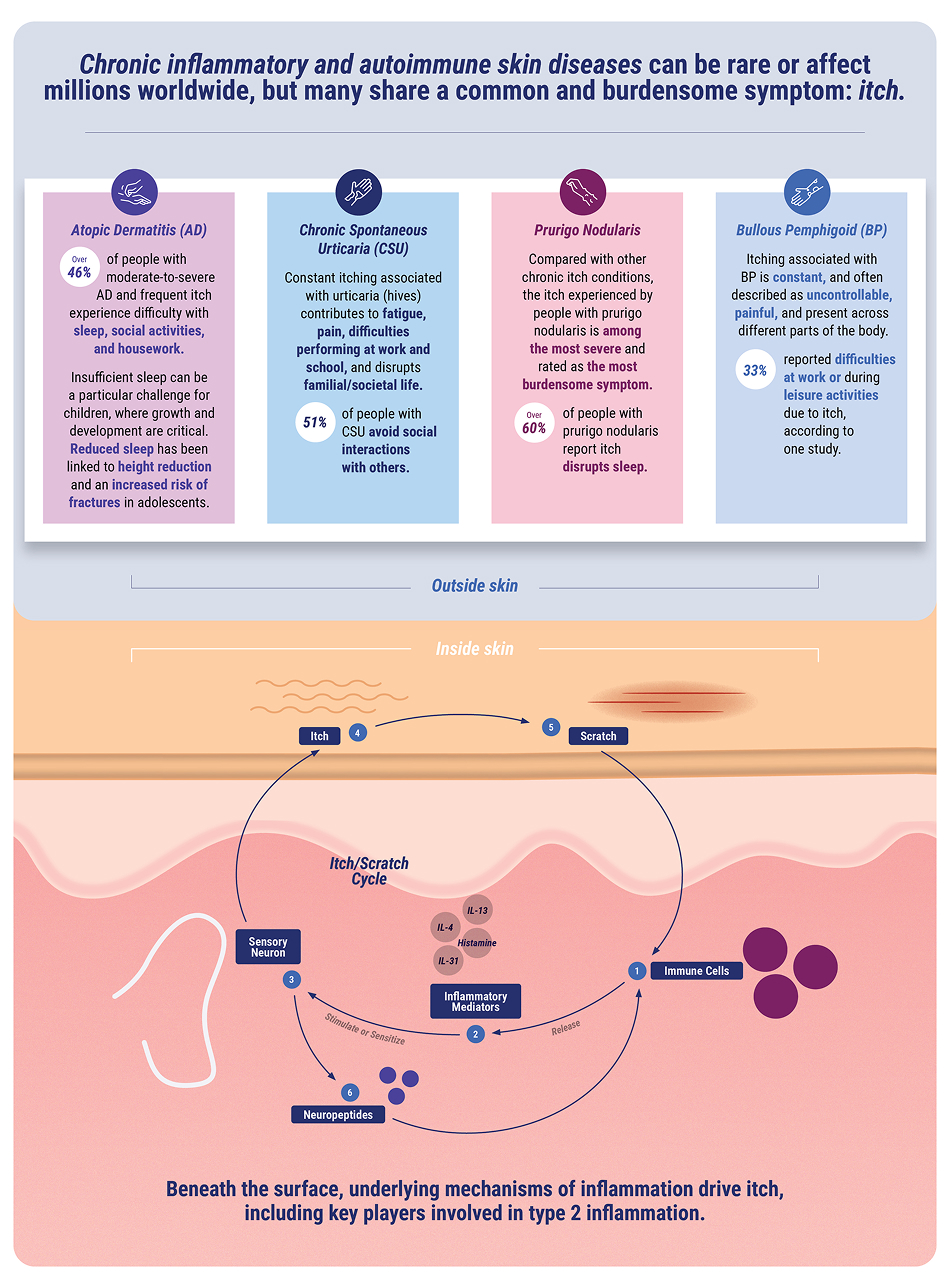
Image Caption: 1) Immune cells, including type 2 inflammatory cells, release 2) inflammatory mediators like IL-4, IL-13, IL-31 and histamine.6 These interact with 3) sensory neurons to sensitize them, which means they can become hyperreactive to stimuli that would normally not lead to itch or lead to augmented itch sensations.6,7 4) Itch sensations lead to 5) scratching, which further stimulates the immune response and sensory neuron activation, perpetuating the itch/scratch cycle.6 Additionally, sensory neurons can release7 6) neuropeptides which further stimulate the immune response and subsequent sensory nerve cell activation to promote itch, which also ramps up the itch-scratch cycle.6
Addressing itch at its root
Behind every statistic about a chronic skin disease with persistent itch is an individual whose daily life is profoundly affected. Treatment methods that move beyond superficial symptom management and factor in what’s occurring beneath the skin’s surface are essential to meaningfully reduce the burden of itch and positively change the way people can live their lives. Addressing common biological processes underlying these conditions, like type 2 inflammation, can offer a more comprehensive therapeutic strategy to long-term disease management. At Regeneron, we follow the science to develop evidence-based approaches that can help people and their physicians better manage the daily impact of chronic skin diseases and reduce their global impact.
References:
- Yosipovitch, G., et al. (2024). International study on prevalence of itch: Examining the role of itch as a major global public health problem. British Journal of Dermatology, 191(5), 713–718. https://doi.org/10.1093/bjd/ljae260.
- Naldi, L., et al. (2026). The worldwide burden of skin diseases: Lessons from the global burden of disease data. Journal of the European Academy of Dermatology and Venereology. https://doi.org/10.1111/jdv.70562.
- Hewitt, R. M., et al. (2024). A qualitative exploration of the impact, management, and existing psychological support available for adults living with skin conditions. Acta Dermato-Venereologica, 104, adv40657. https://doi.org/10.2340/actadv.v104.40657.
- Song, J., et al. (2018). Pruritus: Progress toward pathogenesis and treatment. BioMed Research International, 2018, 1–12. https://doi.org/10.1155/2018/9625936.
- Silverberg, J. I., et al. (2018). A comprehensive conceptual model of the experience of chronic itch in adults. American Journal of Clinical Dermatology, 19(5), 759-769. https://doi.org/10.1007/s40257-018-0381-6.
- Garcovich, S., et al. (2021). Pruritus as a Distinctive Feature of Type 2 Inflammation. Vaccines, 9(3), 303. https://doi.org/10.3390/vaccines9030303.
- Kabata, H., & Artis, D. (2019). Neuro-immune crosstalk and allergic inflammation. The Journal of clinical investigation, 129(4), 1475–1482. https://doi.org/10.1172/JCI124609.
Share this story


More Regeneron Stories
Tapping into Real-World Data for Positive Human Impact
Join us for the latest episode of The Nucleus, exploring how real-world data and genomic insights can improve health.
October 14, 2026
.jpg)
Research & Preclinical Development
A Mission Rooted in Neuroscience
Guided by a founding commitment, powerful insights and novel scientific approaches, we're aiming to address some of the most complicated conditions.
September 25, 2026
Navigating Metastatic Melanoma
A story of optimism, resilience and advocacy following a stage 4 melanoma diagnosis.
September 25, 2026