
Navigating Metastatic Melanoma
A story of optimism, resilience and advocacy following a stage 4 melanoma diagnosis.

Regeneron
September 25, 2026
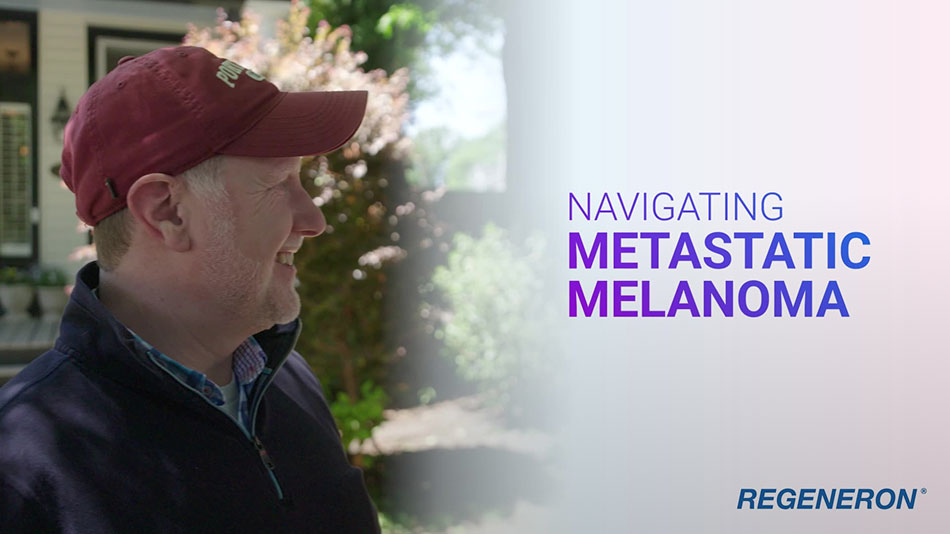
A few years ago, Steve and his wife Lauren were young professionals living in Washington, D.C. They had an active lifestyle. They traveled often. They were looking ahead, including trying to have a child. Their plans for the future were suddenly put on hold when Steve found a lump on his neck, and he was soon diagnosed with stage 4 melanoma. It had already spread to his liver, bones, spleen and lymph nodes.
Beyond the Surface
Melanoma is a serious form of skin cancer that begins in the cells responsible for producing skin pigment, called melanocytes. It can often be easier to detect than other cancers because most melanomas can be seen on the skin. However, if left undetected, it can spread to distant parts of the body. When this happens, it’s Stage 4 (or metastatic) melanoma, which can make treatment more challenging.1
Steve’s diagnosis came as a complete shock. He led a healthy lifestyle and didn’t have any noticeable symptoms. “Growing up on Long Island, I had my fair share of sunburns,” he remembered.
But as an adult he wore sunscreen, visited the dermatologist annually and knew what to look out for in terms of irregular moles. While nearly 90% of cutaneous (or, of the skin) melanoma cases can be linked to exposure to ultraviolet (UV) rays like the sun, it is not the only cause. Family history, genetics and other environmental factors can also contribute.1
Melanoma that is detected early — before it spreads beyond the skin — can often be treated successfully, with five-year survival rates exceeding 99%. However, when melanoma spreads to distant parts of the body, treatment can become more difficult. In these cases, the five-year survival rate drops to 35%, underscoring the importance of awareness, early detection and advances in care.2
Supporting Others in Navigating Their Melanoma Journey
When he was first diagnosed, Steve recalls his doctor using the words “cautiously optimistic” when describing his outlook. This helped Steve shift his focus from fear to what he could control. “I really just wanted as much information as I could get my hands on. So I did a lot of research on the internet,” Steve said.
Looking back, Steve reflects on the importance of being an empowered patient. “You have to ask the questions. You have to do your own research. You have to advocate for yourself.”
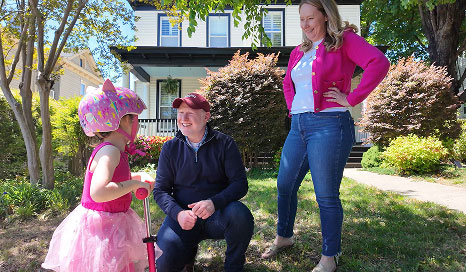
Today, Steve uses his experience to support others navigating a melanoma diagnosis. He is actively involved with the Melanoma Research Foundation and Imerman Angels, where he mentors newly diagnosed patients. When asked what inspired him to share his story, he remembered how he felt when he was first diagnosed. “All I wanted was to talk with someone that went through the same experience that I did,” he said. Steve hopes sharing his story encourages others to seek information, ask questions and feel empowered throughout their care journey.
Importance of Advances in Care
Steve reflects on his experiences with gratitude: “I’m still here. I’m living life with no hesitation.” He enjoys spending time with his wife and daughter — the family he once feared he might not have the chance to grow.
Ongoing research in melanoma, and especially the proven advances feel deeply personal for Steve, “Ongoing research and clinical trials for melanoma are critical. They are literally the reason why people like me are still here today.”
For more information and resources on melanoma, consider visiting the organizations below*:
- AIM at Melanoma Foundation: AIM at Melanoma Foundation is a global patient advocacy organization dedicated to ending melanoma and improving the lives of those affected by the disease. Founded in 2004, AIM advances its mission by funding paradigm‑shifting, collaborative research initiatives, educating patients, healthcare professionals, and the public, and advocating for melanoma survivors and their families. Through global efforts such as the International Melanoma Tissue Bank Consortium, AIM brings together leading researchers to accelerate the discovery of more effective treatments and ultimately a cure for melanoma.
- Imerman Angels: Imerman Angels is a nonprofit patient advocacy organization that provides free, personalized one-on-one peer support for cancer fighters, survivors, previvors and caregivers by connecting individuals with trained “Mentor Angels” who share similar cancer experiences, using a human-led matching process based on factors like diagnosis, age, gender and treatment journey to ensure meaningful, empathetic connections. Their mission is centered on being a “people organization” that fosters comfort, understanding and community through shared lived experiences rather than clinical or institutional support.
- Melanoma Research Alliance (MRA): The Melanoma Research Alliance is a global nonprofit organization and the world’s largest private funder of melanoma research. MRA focuses on accelerating scientific discovery and advancing innovative research by investing in high impact grants aimed at improving treatment options and ultimately curing melanoma, while engaging the melanoma community to support progress toward better patient outcomes.
- The Melanoma Research Foundation: The Melanoma Research Foundation is the largest independent organization dedicated to eradicating melanoma by accelerating medical research while educating and advocating for the melanoma community. Through trusted educational resources, patient engagement initiatives, and opportunities for advocacy, MRF empowers patients, caregivers, and healthcare professionals with the information and support they need. MRF offers support such as an online community where individuals affected by melanoma can connect with others, share experiences, ask questions and access reliable resources that support informed decision-making throughout their melanoma journey.
- Skin Cancer Foundation: The Skin Cancer Foundation (SCF), a 501(c)(3) nonprofit organization, saves and improves lives by empowering people to take a proactive approach to daily sun protection and the early detection and treatment of skin cancer. The Foundation delivers public education programs, provides patients with guidance and reassurance, engages medical professionals, awards research grants and leads advocacy campaigns that call for policy changes. As a service to consumers, SCF grants its industry-recognized Seal of Recommendation to products that meet its criteria for safe and effective sun protection. SCF also operates Destination Healthy Skin, a program that works with local dermatologists in communities around the U.S. to provide free skin cancer screenings to those in need. Since its inception in 1979, the Foundation has recommended regular skin exams and following a complete sun protection strategy that includes seeking shade, using sunscreen daily and covering up with clothing, hats and sunglasses. SkinCancer.org.
*Note: The organizations listed are independent nonprofit organizations. Their inclusion on this page is for informational purposes only and does not imply endorsement of Regeneron or any specific product.
References:
- Melanoma Research Foundation. Understanding Melanoma. https://melanoma.org/what-is-melanoma/understanding-melanoma/.
- American Cancer Society. Survival Rates for Melanoma Skin Cancer. https://www.cancer.org/cancer/types/melanoma-skin-cancer/detection-diagnosis-staging/survival-rates-for-melanoma-skin-cancer-by-stage.html.
Share this story


More Regeneron Stories

Tapping into Real-World Data for Positive Human Impact
Join us for the latest episode of The Nucleus, exploring how real-world data and genomic insights can improve health.
October 14, 2026
.jpg)
Research & Preclinical Development
A Mission Rooted in Neuroscience
Guided by a founding commitment, powerful insights and novel scientific approaches, we're aiming to address some of the most complicated conditions.
September 25, 2026

The Ins and Outs of Itch
Following the science of inflammation to break the cycle of itch and reduce the significant daily burden of skin diseases.
September 24, 2026