
A 35+ year journey with a relentless Focus on Science
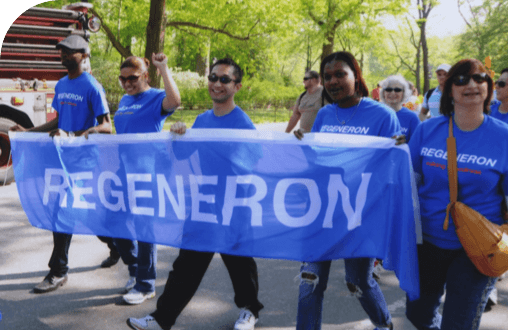
Our commitment to patients extends well beyond our labs. We are proud to support the communities we serve, to embrace a culture and business model of patients over profits, and to hold the highest ethical standards when it comes to patient well-being.
2026
- The FDA approved our first gene therapy for people born with profound hearing loss.
2025
- Regeneron awarded the 2025 Prix Galien USA Best Biotechnology Product for our medicine for allergic and atopic conditions.
- The European Commission approves our myeloma cancer treatment.
-
We announce a significant expansion of our manufacturing capacity through a $3 billion agreement with FUJIFILM Diosynth Biotechnologies, bringing Regeneron’s planned investments in the United States to more than $7 billion.
2024
-
Regeneron acquires 2seventy bio, Inc’s pipeline of investigational novel immune cell therapies, and announces the formation of Regeneron Cell Medicines.
-
The FDA and European Union approve new indications for our treatment for certain type 2 allergic conditions.
-
The European Union approves our treatment for lymphoma cancers, marking Regeneron’s first approved bispecific antibody.
2023
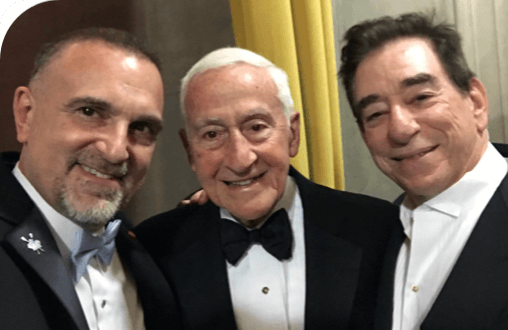
- Industry luminary P. Roy Vagelos, MD, retires as board chair.
- Drs. Leonard S. Schleifer and George D. Yancopoulos become co-Chairs of the board.
- We receive approval for our 11th FDA-approved medicine, a complement inhibitor indicated for CHAPLE disease.
- We receive approval for our 12th FDA-approved medicine, a VEGF inhibitor for certain retinal diseases.
-
We increase and extend our commitment as lead sponsor of Regeneron International Science and Engineering Fair (ISEF), the world’s largest pre-college STEM competition, with an additional $34 million over five years.
-
Regeneron acquires long-standing collaborator, Decibel Therapeutics, Inc., strengthening our gene therapy and auditory programs.
2022
- The FDA and European Commission approve new indications for our treatments for certain type 2 allergic conditions and cancer.
- Regeneron takes full ownership of its cancer treatment, with exclusive worldwide development, commercialization and manufacturing rights.
- Regeneron acquires Checkmate Pharmaceuticals, deepening its immuno-oncology portfolio.
- Regeneron awarded the 2022 Prix Galien USA Best Biotechnology Product for our Ebola treatment.
2021
- We receive our ninth FDA approval for our ANGPTL3 inhibitor for a rare genetic cardiometabolic disease.
- The FDA approves new indications for our treatments in certain type 2 allergic conditions and cancer; European Commission approves a new indication for our cancer treatment.
- The European Commission authorizes Regeneron’s COVID-19 antibody cocktail.
- Regeneron and Intellia announce first-ever clinical data supporting the safety and efficacy of in vivo CRISPR genome editing.
- Regeneron Genetics Center® (RGC) discovers GPR75 gene mutations that protect against obesity.
2020
- The FDA approves an expanded indication for our treatment for certain type 2 allergic conditions.
- The FDA approves our Ebola treatment, our eighth FDA-approved medicine.
- Regeneron discovers and develops novel COVID-19 antibody cocktail in record time; FDA authorizes for emergency use.
- Regeneron named Science magazine’s #1 biopharma company for the seventh time.
2019
- Regeneron and Cold Spring Harbor Laboratory unveil new dedicated laboratories for student science education. Society for Science announces Regeneron as new sponsor of the International Science and Engineering Fair.
- The FDA and European Commission approve new indications for our various treatments in certain eye diseases, type 2 allergic conditions, cancer and cardiovascular diseases.
- Regeneron debuts on the prestigious Dow Jones Sustainability World Index.
2018
- The FDA approves a new indication for our treatment for type 2 allergic conditions.
- The FDA approves our PD-1 inhibitor antibody for certain type of cancers, our seventh FDA-approved medicine.
2017
- We achieve our fifth FDA-approved medicine — an IL-4 antagonist for certain type 2 allergic conditions.
- We achieve our sixth FDA-approved medicine, indicated for certain inflammatory diseases, marking our second fully human monoclonal antibody.
- Recognized on the Civic 50 list of most community-minded companies in the United States.
2016
- We are named as the new title sponsor for the Science Talent Search (just the third in the prestigious competition's 80+ year history).
2015
- The FDA approves our fourth medicine, marking our first FDA-approved fully human monoclonal antibody.
- We launch a major new immuno-oncology collaboration with Sanofi.
2014
- The Regeneron Genetics Center® (RGC), a new human genetics initiative, officially launches.
- We initiate the STEM Teaching Fellowship, a joint effort with the STEM Leadership Center, to develop a highly trained science teacher community, and Sci2Med Academy, in collaboration with Yonkers Partners in Education, to broaden career horizons for students who are underrepresented in the science fields. Learn more about our initiatives.
- We begin building our first ex-U.S. IOPS site in Limerick, Ireland.
2013
- We announce the first recipients of our annual Regeneron Prize for Creative Innovation.
- Our European business office opens in Dublin, Ireland.
- Scrip Intelligence names Len and George as the "Management Team of the Year."
2012
- The Science Top Employer survey names us the #1 employer in the global biopharmaceutical industry.
- Scrip Intelligence names us Biotech Company of the Year.

2011
- The FDA approves our treatment for certain eye diseases.
- Our President and CEO, Leonard S. Schleifer, is named Ernst & Young's 2011 New York Entrepreneur Of The Year®.
2010
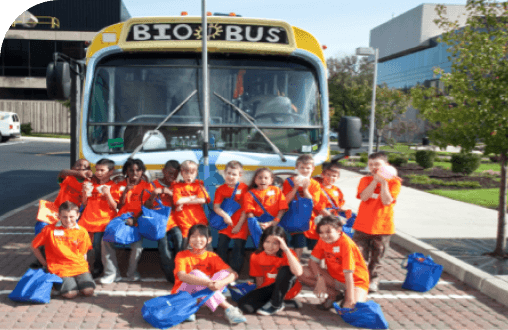
- We begin sponsorship of the BioBus, a mobile laboratory, to drive hands-on science education in underserved school districts.
2009
- We expand and extend our antibody collaboration with Sanofi.
- Our investigational PCSK9 inhibitor for cardiovascular disease begins clinical development.
- We hire our 1,000th employee and move into new buildings on our Tarrytown campus.
2008
- The FDA approves our first medicine.
2007
- A collaboration with Sanofi focuses on developing fully human antibodies using our VelocImmune® technology platform.
2006
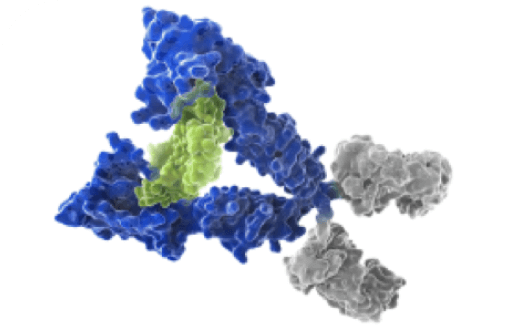
- Our first fully human antibody, an IL-6R antagonist for certain inflammatory diseases, enters clinical development.
- A collaboration with Bayer HealthCare focuses on developing our treatment for certain eye diseases outside the U.S.
2004
- Our investigational VEGF inhibitor for certain eye diseases begins clinical development.
2003
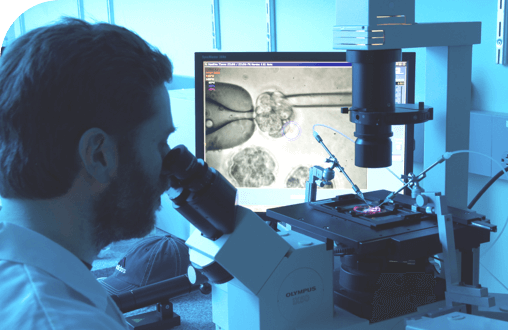
- Our first paper on VelociGene® is published, introducing the world to our proprietary Veloci technologies.
- We become one of the original sponsors of the Westchester Science & Engineering Fair (WESEF) to support and reward scientific excellence in promising high school students.
2000
- Our IL-1 inhibitor for a rare inflammatory disease begins clinical exploration.
1999
- George Yancopoulos becomes the decade's 11th most highly cited scientist in the world.
1997
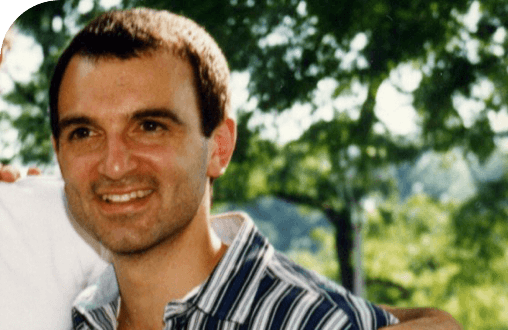
- The phase 3 trial of our first neurotrophic factor does not achieve its primary endpoint, and though the team is disappointed, we regroup to focus on new therapeutic solutions.
1995
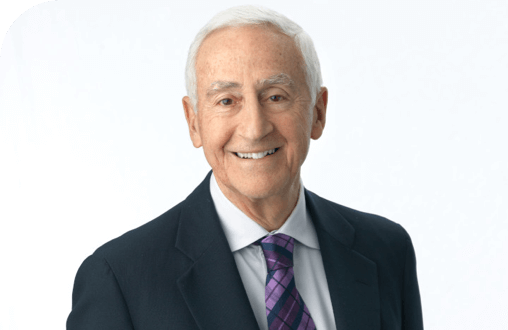
- Industry legend P. Roy Vagelos, MD, becomes chairman of the board.
- Dr. Vagelos, a businessman-scientist who had previously led Merck's R&D division, encourages us to focus our research on disease settings where the biological profile can be fully characterized and the clinical benefit evaluated more quickly.
1993
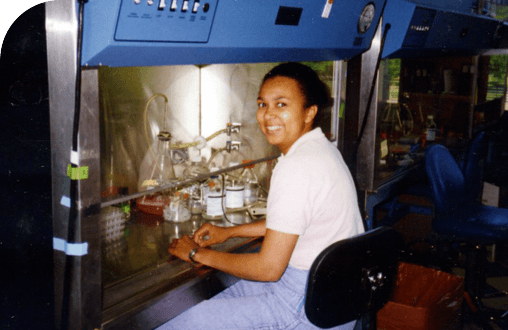
- We acquire space for a drug manufacturing facility in Rensselaer, NY, years before having an FDA-approved medicine.
1992
- Clinical development of our first investigational drug, a neurotrophic factor, begins.
1991
- REGN stock begins trading publicly on the NASDAQ; the initial public offering (IPO) raises $91.6 million.
1990
- Science publishes our first paper, which becomes the most highly cited neurobiology paper of the year.
- We announce a collaboration to develop neurotrophic factors.
1989
- George D. Yancopoulos, MD, PhD, a highly regarded young molecular immunologist at Columbia University, joins Regeneron.
Len and George reflect on their long partnership
1988
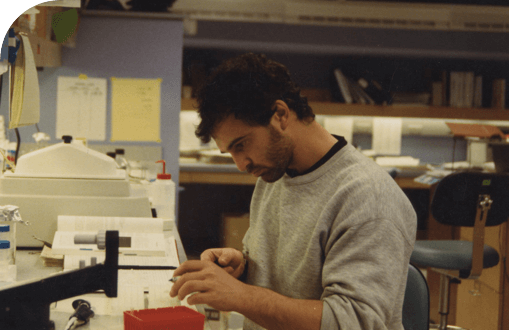
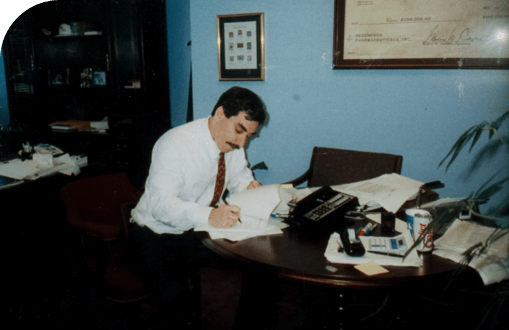
- Regeneron is founded by Leonard S. Schleifer, MD, PhD, a young neurologist and assistant professor at Cornell University Medical College.
Len Schleifer describes how Regeneron raised its first $1 million
Len Schleifer explains how Regeneron got its name
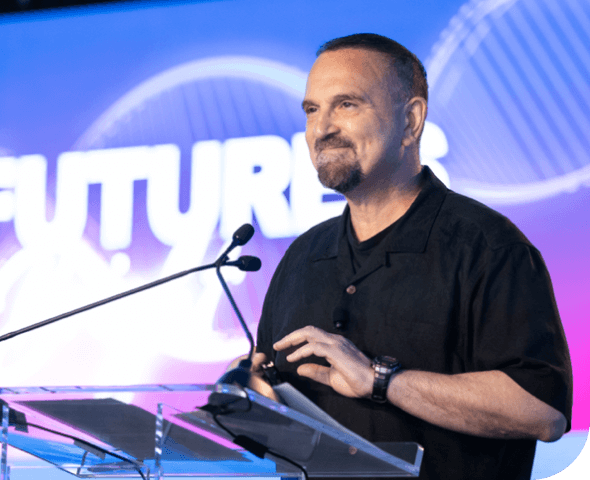
"There may be no other thing you can do that is more rewarding than to really move the human condition forward."
George D. Yancopoulos, MD PhD
Board co-Chair, President and Chief Scientific Officer